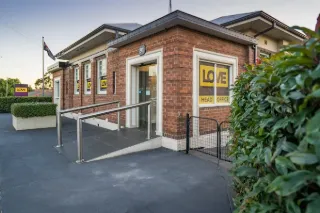
Originally inhabited by the Wonnarua people, the area became a major coal mining center in the late 19th century following the discovery of the Greta Coal Seam. The town's layout and architecture still reflect its industrial heritage, with many worker cottages remaining.
Transitioning from a blue-collar mining town to a diversified regional hub supported by tourism, viticulture, and a growing commuter population from Newcastle.
- High affordability compared to Newcastle (30-40% cheaper).
- Direct proximity to the Hunter Valley wine and tourism district.
- Strong rental yields attracting long-term property investors.
- Improved connectivity via the Hunter Expressway (M15).
- Comprehensive local amenities including a major hospital and shopping hubs.
- Extensive historical underground mine workings causing subsidence risks.
- Flood-prone land near Black Creek and its tributaries.
- Higher than average socio-economic disadvantage in certain sectors.
- Limited public transport connectivity to major employment hubs.
- High insurance premiums in identified bushfire and flood zones.
How this suburb feels day-to-day.
Dominant dwelling stock.
Typical entry to ceiling.
Cessnock serves as the commercial heart of the Hunter Valley. It offers a rare combination of lifestyle proximity and urban convenience at a price point that remains accessible to the average Australian earner.
$600k – $850k
$420k – $520k
12-month movement
Current asking rents
While the rapid post-COVID surge has stabilized, Cessnock continues to see steady growth as buyers are priced out of the Newcastle coastal fringe.
Price comparison
Median price ÷ median income
Estimated rental yield
Cessnock remains highly affordable for dual-income families, though rising interest rates have impacted the lower-quartile buyer segment.
Lower = tighter market
Avg time on market
Annual rental increase
Local service workers, young families, and contractors in the mining/viticulture sectors.
Strong cash flow potential with low vacancy risks. Capital growth is expected to track slightly above regional averages due to infrastructure spend.
- Hunter Expressway reducing travel time to Newcastle and Sydney.
- Expansion of the Hunter Valley wine tourism industry.
- Ongoing residential rezoning and new estate developments.
- Relocation of remote workers seeking lifestyle and lower mortgages.
- State government investment in regional health and education infrastructure.
- Environmental constraints limiting developable land in some directions.
- Economic sensitivity to the coal mining industry's long-term transition.
- Rising cost of insurance in high-risk zones.
Moderate to strong growth expected as Cessnock solidifies its role as a secondary commuter hub for Newcastle while maintaining its own distinct economic identity.
vs last 12 months
Relative comparison
Review the NSW Bureau of Crime Statistics and Research (BOCSAR) maps for specific street-level data; safety varies significantly between the CBD and newer estates.
The primary physical risks are related to the town's industrial past and its natural topography.
Significant flood zones exist along Black Creek; check Cessnock City Council flood maps before purchase.
Properties on the southern and western fringes bordering Werakata National Park are in high-risk bushfire zones.
Expect higher premiums for flood-prone or bushfire-mapped properties; some insurers may decline cover in high-risk subsidence zones.
Mine Subsidence District, Bushfire Prone Land, Flood Planning Area
West Cessnock and Bellbird North expansion areas.
Zoning and overlays in Cessnock are more restrictive than in many other regional towns due to the Subsidence Advisory NSW requirements.
Primarily road-based; Hunter Expressway is the main artery. No passenger rail service (nearest is Greta or Maitland).
High. Multiple supermarkets (Coles, Woolworths, Aldi), Big W, and a variety of local cafes and pubs.
Good access to local sports fields and the nearby Werakata National Park.
Several public primary schools and Cessnock High; private options include St Patrick's Primary.
Served by Cessnock District Hospital and numerous GP clinics.
A traditionally working-class community that is increasingly attracting young families and professionals from larger cities.
The demographic shift is driving demand for better cafes, childcare, and modern housing styles.
Focus is on residential expansion and CBD revitalization to support tourism.
- Cessnock CBD Masterplan implementation to improve walkability and aesthetics.
- New residential estates in Bellbird and West Cessnock increasing housing supply.
- Upgrades to local regional airport facilities for tourism.
- Increased traffic congestion on Wollombi Road during peak hours.
- Loss of semi-rural character on the town fringes.
Residents value the 'big country town' feel and the proximity to the vineyards, though there is a desire for more youth activities and improved public safety in the CBD at night.
It's a great place to raise kids with plenty of space, but you definitely need two cars to survive here.
I could never have afforded a house like this in Newcastle. The commute is easy now with the expressway.
The town has everything I need, but I do worry about the hoons on the main road on Friday nights.
The vacancy rate is so low I've never had a property sit empty for more than a week.
Working at the hospital is great, and the local community is very tight-knit and supportive.
The main street needs a bit of a facelift, but the new council plans look promising for tourism.
- Always order a Mine Subsidence Board report before exchanging contracts.
- Check the 1-in-100-year flood maps specifically for properties near Black Creek.
- Prioritize properties with side access for caravans or boats, as this is highly valued in this market.
- Look for older cottages on large blocks (800sqm+) for future subdivision potential (STCA).
- Negotiate harder on properties that require significant bushfire BAL-rating upgrades.
- Is this property located within a proclaimed Mine Subsidence District?
- What is the BAL (Bushfire Attack Level) rating for this specific lot?
- Has this property ever experienced overland flow or flooding during extreme weather?
- Are there any easements on the title that restrict building a shed or pool?
- What is the current zoning, and are there any proposed changes in the new LEP?
- What are the average council rates and water levies for this area?
- Is the property connected to town sewer, or does it use an on-site system?
- Highlight energy-efficient features to offset rising regional utility costs.
- Ensure all historical extensions have council approval, as due diligence is increasing.
- Professional styling is essential to stand out against the high volume of stock in newer estates.
- Target the 'tree-change' market from Sydney and Newcastle in your marketing copy.
- Address any minor maintenance issues before listing to avoid 'risk-averse' buyer lowballs.
Position the property as a 'lifestyle gateway' that balances regional tranquility with urban convenience. Focus on the 'value for money' compared to Newcastle.
High-yield play with long-term capital growth potential driven by regional infrastructure.
Over-exposure to mining cycles and high maintenance costs on older weatherboard cottages.
- Target 3-bedroom houses within 2km of the CBD.
- Verify flood and subsidence status before bidding.
- Budget for higher insurance premiums.
- Consider a 'granny flat' addition to maximize yield on larger blocks.
- Have your references ready; the market is extremely competitive.
- Look at Bellbird for newer homes if your budget allows.
- Check mobile reception during inspections, as some pockets have dead zones.
Affordable rents compared to the coast; large yards are common.
Heating costs in winter can be high in older, uninsulated homes.
- Regularly review rents to keep pace with the high regional growth.
- Invest in air conditioning; it is considered a non-negotiable for local tenants.
- Maintain gardens to a high standard to attract long-term family tenants.
Ensure smoke alarms and electrical safety checks are up to date as per NSW 2020 regulations.
- Stock levels are tightening in the sub-$700k bracket.
- Out-of-area buyers now account for nearly 40% of inquiries.
- Buyers are increasingly asking about 'BAL' (Bushfire Attack Level) ratings.
The 'Wine Country Lifestyle' without the Pokolbin price tag.
Young families, first home buyers, and yield-focused SMSF investors.
This report is based on data available as of 2026-03-05 and is intended for informational purposes only. It does not constitute financial or legal advice. Buyers should conduct their own independent due diligence and consult with qualified professionals before making any property purchase.