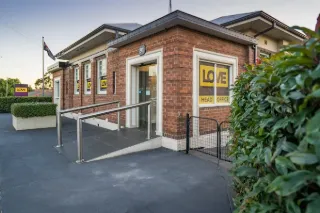
Originally designed as the primary administrative centre for the Hunter Valley before West Maitland took commercial precedence. It features a significant collection of 19th-century architecture, including the landmark Maitland Gaol and various colonial-era government buildings. The suburb served as a vital junction for coal and agricultural transport throughout the 20th century.
Today, it is a sophisticated regional centre that balances a historic 'old town' feel with the massive Stockland Green Hills retail precinct and a burgeoning medical district.
- World-class medical facilities at the New Maitland Hospital driving professional demand.
- Exceptional retail amenity at Stockland Green Hills, reducing the need to travel to Newcastle.
- High-quality heritage housing stock that offers long-term capital appreciation.
- Strong school catchment areas, particularly for Maitland Grossmann High.
- Diverse property mix from 19th-century cottages to modern 2020s estates.
- Significant portions of the suburb are subject to Heritage Conservation Area controls.
- Flood risk in low-lying areas near the New England Highway and Tenambit border.
- Increasing traffic congestion on the New England Highway during peak hours.
- Higher entry price point compared to neighboring suburbs like Metford or Tenambit.
How this suburb feels day-to-day.
Dominant dwelling stock.
Typical entry to ceiling.
East Maitland is the 'blue chip' anchor of the Maitland LGA. It provides the rare combination of regional affordability with metropolitan-grade services, making it the primary target for both local upgraders and sea-change investors.
$780k – $1.45m
$480k – $680k
12-month movement
Current asking rents
Prices have decoupled from broader regional trends due to the specific infrastructure investment in the Metford/East Maitland corridor, maintaining resilience even during interest rate cycles.
Price comparison
Median price ÷ median income
Estimated rental yield
While more expensive than its immediate neighbors, it offers significantly better value than Newcastle's inner suburbs while providing similar levels of amenity.
Lower = tighter market
Avg time on market
Annual rental increase
Healthcare professionals, retail managers, and young families.
Extremely positive. The proximity to the hospital ensures a steady stream of high-quality essential worker tenants. Capital growth is supported by the lack of new land release in the immediate East Maitland core.
- Ongoing expansion of medical services and private health clinics.
- Continued gentrification of the heritage precinct.
- Newcastle's price overflow pushing buyers further up the Hunter Expressway.
- Limited supply of character homes in the region.
- Rising insurance premiums in flood-prone zones.
- High renovation costs for heritage-listed properties.
- Potential for oversupply in the wider Maitland LGA fringe estates.
Expect East Maitland to outperform the broader Hunter region as it transitions into a 'secondary CBD' for the area. The heritage precinct will likely see the highest percentage gains as stock becomes increasingly rare.
vs last 12 months
Relative comparison
Check specific street data near the railway station and major shopping car parks where opportunistic theft is more frequent.
The primary risks are environmental and regulatory rather than economic.
Moderate risk. Parts of the suburb near the New England Hwy and the eastern boundary are on the 1:100 year flood fringe.
Low risk for the main residential areas; some risk on the rural-residential fringes.
Expect higher premiums for properties identified in the Maitland City Council Flood Map 2023/24 updates.
Heritage Conservation Area (HCA), Flood Planning Area
Metford border (medical precinct) and infill sites near Green Hills.
Zoning is restrictive in the heritage core, protecting value but limiting development. Infill is occurring in the 1960s-70s pockets.
Two train stations (East Maitland and Victoria Street) plus extensive bus networks.
Stockland Green Hills provides major department stores, cinemas, and dining.
Excellent access to Rathluba Lagoon and the Maitland Park precinct.
Home to Maitland Grossmann High and several high-performing primary schools.
Unrivalled regional access with the New Maitland Hospital on the doorstep.
A stable, middle-to-high income demographic with a growing professional class.
The high owner-occupancy rate in the heritage areas supports price stability, while the rental market is buoyed by the younger medical workforce.
Focus has shifted from the hospital construction to the surrounding medical support precinct and retail upgrades.
- Creation of a high-income employment hub.
- Improved public transport frequency to the medical precinct.
- Increased demand for short-term and professional rental accommodation.
- Increased traffic on Metford Road and Chelsea Gardens Drive.
- Loss of some semi-rural buffer zones between East Maitland and Metford.
Residents value the 'everything at your doorstep' convenience and the suburb's stately feel, though some complain about the New England Highway traffic.
I work at the hospital and live in a 1920s cottage. I can walk to the shops and my commute is 5 minutes.
It was harder to get into than we thought, but the capital growth in just two years has been amazing.
Having Green Hills so close is wonderful, but the traffic on the main road is getting much worse lately.
Never had a day of vacancy. The quality of tenants here is much higher than in other parts of Maitland.
Renovating here is a nightmare with the council heritage rules. Make sure you know what you're buying.
Grossmann High is the reason we moved here. The community feel in the older streets is lovely.
- Prioritize properties on the 'hill' side of the New England Highway to avoid flood issues.
- Check the Section 10.7 certificate carefully for Heritage Conservation Area (HCA) status.
- Look for 1960s-70s brick homes for better renovation flexibility compared to heritage cottages.
- Attend mid-week inspections to gauge hospital-related traffic noise.
- Verify school catchment boundaries as they are strictly enforced for Grossmann High.
- Is this property located within a Heritage Conservation Area?
- Has this specific street ever experienced overland flow or drainage issues during East Coast Lows?
- What are the current school catchment zones for this address?
- Are there any proposed developments for the vacant land near the hospital/Metford border?
- What is the split of owner-occupiers versus renters in this particular street?
- Does the property have any unapproved structures that might conflict with heritage overlays?
- Highlight proximity to the hospital in all marketing, even for non-medical buyers.
- Ensure heritage features are well-maintained; buyers pay a significant premium for 'authentic' charm.
- Professional styling is essential here as the buyer demographic is increasingly professional.
- Consider an auction campaign if the property is in the heritage precinct due to low stock levels.
Position the property as a 'lifestyle and infrastructure' play. Emphasize that East Maitland is the Hunter's most resilient market due to the dual anchors of health and retail.
High-yield, low-vacancy play targeting the medical workforce.
Overpaying for modern stock in fringe estates where land is still available.
- Target 2-3 bedroom cottages within walking distance of Victoria Street station.
- Consider dual-occupancy potential on larger 800sqm+ blocks (subject to council).
- Focus on 'Metford-border' properties for maximum hospital worker appeal.
- Budget for higher insurance if near the 1:100 year flood line.
- Have your application ready before the viewing; properties move in under 48 hours.
- Highlight stable employment if working in the health or education sectors.
- Check for off-street parking as heritage streets can be narrow.
Walkable access to major shopping and high-quality local parks.
Older homes can be poorly insulated and expensive to heat/cool in winter.
- Install air conditioning to attract premium medical professional tenants.
- Maintain gardens to a high standard to match the suburb's character.
- Review rents every 6-12 months as the 'hospital effect' continues to drive prices up.
Ensure all heritage-related maintenance uses approved materials to avoid council fines.
- The market is currently split between heritage lovers and infrastructure-focused investors.
- Stock levels remain 15% below the 5-year average for this time of year.
- Out-of-area buyers from Sydney and Newcastle now make up 40% of enquiries.
The '15-minute city' of the Hunter—work, shop, and play all within a 2km radius.
Young professional families, medical staff, and SMSF investors.
This report is based on data available as of 2026-03-06. It is intended for informational purposes only and does not constitute financial or legal advice. Buyers should conduct their own independent investigations and consult with qualified professionals before making any property purchase.