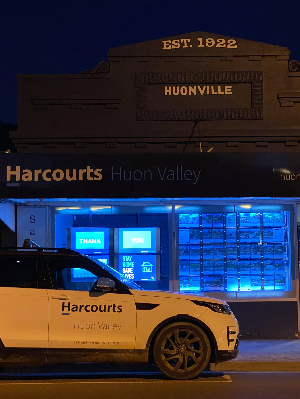
Originally established as a timber and apple-growing hub in the mid-19th century. The town evolved into the primary administrative and commercial center for the Huon Valley as the orchard industry expanded.
A bustling regional hub that balances its agricultural roots with a growing population of tree-changers and Hobart commuters.
- Picturesque riverside setting with immediate access to nature.
- Comprehensive local amenities including major supermarkets and health services.
- Strong sense of community and active local markets.
- Larger block sizes compared to Hobart suburbs.
- Growing 'foodie' culture with high-quality local produce and cideries.
- Significant flood overlays on properties near the river and Wilmot Road.
- Limited public transport options for those without a car.
- Winter temperatures can be significantly colder than coastal Hobart.
- Huon Highway can experience congestion during peak commute times.
- Limited secondary school variety within the immediate suburb.
How this suburb feels day-to-day.
Dominant dwelling stock.
Typical entry to ceiling.
Huonville serves as the 'capital' of the Huon Valley. It provides the essential infrastructure that smaller surrounding villages lack, making it the most practical choice for families moving to the region.
$620k – $950k
$450k – $580k
12-month movement
Current asking rents
Prices have stabilized after the post-2020 boom, offering a more predictable entry point for buyers compared to the volatile Hobart market.
Price comparison
Median price ÷ median income
Estimated rental yield
While more affordable than Hobart, local price growth has outpaced local wage growth, making it moderately stretched for local first-home buyers.
Lower = tighter market
Avg time on market
Annual rental increase
Young families, essential workers, and professionals commuting to Hobart.
Strong rental yields and low vacancy rates make it a defensive investment. Capital growth is tied to Hobart's overall performance.
- Ongoing 'tree-change' migration from mainland Australia.
- Infrastructure upgrades to the Huon Highway.
- Expansion of local tourism and aquaculture industries.
- Limited supply of new residential land due to topography and zoning.
- Rising insurance premiums in flood-prone areas.
- Sensitivity to interest rate changes for commuting families.
- Potential for oversupply in specific new subdivision pockets.
Expect steady growth of 3-5% per annum. Huonville will likely consolidate its position as a premium regional lifestyle destination as Hobart's urban sprawl continues.
vs last 12 months
Relative comparison
Standard home security is sufficient. Most local issues are related to hooning on main thoroughfares rather than serious crime.
Environmental factors are the primary concern, specifically riverine flooding and bushfire proximity.
High risk in low-lying areas near the Huon River. Significant historical flood events (e.g., 1967, 1996, 2019).
Moderate to High risk on the town fringes where residential lots meet dense sclerophyll forest.
Expect higher premiums for properties within the 1-in-100-year flood overlay; some insurers may decline cover for specific riverfront lots.
Flood Prone Areas Hazard, Bushfire-Prone Areas, Landslip Hazard
Newer subdivisions on the northern side of the town center.
Strict planning controls exist around the river to mitigate flood risk, which limits where you can build or extend.
Private car is essential. Limited Tassielink bus services to Hobart.
Excellent for a regional town; Woolworths, specialty shops, and banks present.
High quality riverfront parklands and proximity to Hartz Mountains National Park.
Huonville Primary and Huonville High are central; limited private options locally.
Huonville Community Health Centre and multiple GP clinics available.
A stable, family-oriented community with a growing influx of professional couples.
The high owner-occupancy rate contributes to a well-maintained streetscape and strong community engagement.
Focus is on residential infill and tourism infrastructure.
- Upgrades to the Huonville main street streetscape.
- Expansion of the Huon River boardwalk and recreational facilities.
- New boutique commercial developments in the town center.
- Increased traffic on the Huon Highway.
- Loss of some semi-rural 'buffer' land to new housing estates.
Residents value the balance of convenience and natural beauty, though some express concern over rising costs and winter dampness.
It's the perfect place to raise kids; they can actually play outside and the community really looks out for one another.
The drive to Hobart is easy enough, but the morning fog in winter can be a real challenge on the highway.
We could never afford a backyard like this in Hobart. Huonville gave us a start in the market.
Having the doctors and the supermarket right here means I don't have to travel far for my daily needs.
The town is getting busier, which is good for business, but parking in the center is becoming a bit of a headache.
Finding a rental here was incredibly stressful; there just aren't enough houses for everyone moving down.
- Prioritize properties on higher ground to avoid the Huon River flood plain.
- Check for the presence of a wood heater; they are essential for Tasmanian winters.
- Verify if the property is on town sewerage or a septic system, as many fringe properties use the latter.
- Look for north-facing living areas to maximize solar gain during cold months.
- Investigate the specific bushfire attack level (BAL) rating for properties near forest edges.
- Is this property located within the 1-in-100-year flood overlay?
- Has the property ever experienced water ingress during past flood events (e.g., 2019)?
- Is the property connected to town water and sewerage?
- What is the Bushfire Attack Level (BAL) rating for this specific lot?
- Are there any planned developments for the vacant land nearby?
- What are the average winter heating costs for this home?
- Is there a local school bus route that passes near the property?
- How has the local council addressed drainage in this specific street?
- Highlight energy efficiency and heating upgrades in marketing materials.
- Ensure gardens are well-maintained; 'curb appeal' is highly valued in this regional market.
- Provide a recent building and pest report to streamline the process for Hobart-based buyers.
- Showcase any views of the river or Sleeping Beauty mountain range.
- Target young families by emphasizing proximity to the primary school and parks.
Position the property as a 'lifestyle sanctuary' that doesn't sacrifice convenience. Emphasize the balance between the rural Huon Valley charm and the easy commute to Hobart.
High demand for 3-bedroom family homes with large yards.
Flood risk can impact resale value and insurance costs; limited capital growth compared to inner Hobart.
- Target properties within walking distance of the town center.
- Avoid high-risk flood zones regardless of price.
- Consider minor cosmetic renovations to appeal to professional tenants.
- Ensure heating systems are modern and efficient (reverse cycle air conditioning).
- Have your application ready before viewing; properties move fast.
- Be prepared for high heating costs in winter; ask about insulation.
- Check mobile reception during the inspection as some pockets are weak.
Large blocks and a quiet, safe environment.
Limited public transport makes a car a necessity.
- Maintain gutters and drainage to prevent damp issues common in the valley.
- Install high-quality heating to attract long-term tenants.
- Regularly review rents as the market is currently undersupplied.
Ensure all smoke alarms and heating units meet Tasmanian rental standards.
- The market is currently driven by families relocating from Hobart for better value.
- Properties with 'character' features sell faster than generic new builds.
- Flood disclosure is the biggest hurdle in closing sales near the river.
The 'Gateway to the Far South' lifestyle—river, mountains, and cideries.
Young families (25-40) and active retirees.
This report is based on data available as of 2026-03-13. It is intended for informational purposes only and does not constitute financial or legal advice. Buyers should conduct their own independent investigations and consult with qualified professionals before making any property purchase.