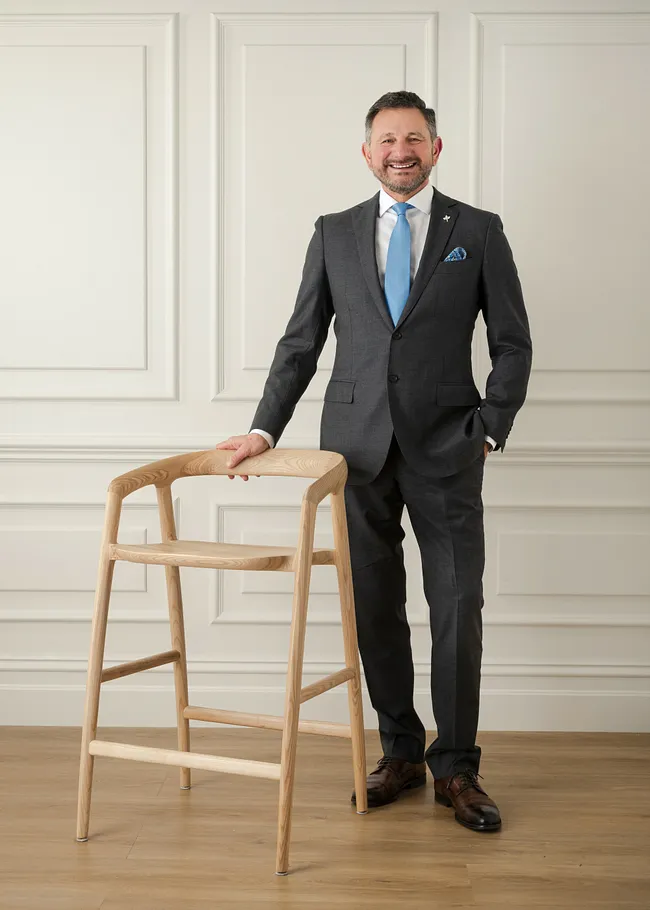
Nicholas West

84 Gatehouse Street, Parkville, Vic 3052
Auction $2,300,000 - $2,500,000
4 2 1
Auction Saturday 7 November 12:00 pm ☰
☰
Originally part of the vast Royal Park reserve, Parkville was subdivided in the 1860s to accommodate Melbourne's growing professional class. It became the epicenter of Victorian academia and medicine following the establishment of the University of Melbourne and major hospitals.
Today, it is a sophisticated enclave where historic terrace rows meet cutting-edge research facilities and the expansive greenery of Royal Park.
How this suburb feels day-to-day.
Dominant dwelling stock.
Typical entry to ceiling.
Parkville is a 'recession-proof' suburb because its economy is anchored by essential services (health and education). It attracts a demographic that prioritizes location and lifestyle over large modern blocks.
$1.9m – $4.8m
$420k – $1.2m
12-month movement
Current asking rents
The low percentage of houses makes them extremely scarce and valuable. The unit median is lower than expected because it includes a high volume of purpose-built student accommodation.
Price comparison
Median price ÷ median income
Estimated rental yield
Parkville is an aspirational market. Entry-level for a renovated house is now consistently above $2 million, making it inaccessible for most first-home buyers.
Lower = tighter market
Avg time on market
Annual rental increase
Medical registrars, university researchers, and international postgraduate students.
Strong capital growth for heritage houses; high yields but lower growth for units. The Metro Tunnel has increased demand for apartments near the new station.
Expect steady, low-volatility growth. Parkville is a 'safe haven' asset class that typically outperforms the broader market during downturns due to its institutional anchors.
vs last 12 months
Relative comparison
Check for secure off-street parking or ensure the property is eligible for a council parking permit. Most crime is opportunistic and centered around the hospital car parks.
The primary risks are financial (high entry cost) and regulatory (heritage constraints). Environmental risks are low.
Low risk; some localized flash flooding on Royal Parade during extreme storms.
Negligible risk.
Standard premiums, though heritage-listed homes may require specialized coverage for authentic material replacement.
HO (Heritage Overlay), SBO (Special Building Overlay)
Parkville Gardens (former Commonwealth Games Village) is the only area with significant recent density.
Heritage overlays mean you likely cannot change the facade or add a second story if it is visible from the street.
World-class with the new Metro station, multiple tram lines (19, 58, 59), and Royal Park train station.
High-end; proximity to Lygon Street dining and CBD retail.
Unrivaled; Royal Park offers golf, tennis, netball, and native bushland.
Top-tier public and private options within walking or short tram distance.
The best in the country; residents are seconds away from major trauma and specialty hospitals.
A highly educated, professional demographic with a significant transient student population.
The high rental percentage is driven by the university; however, the 'South Parkville' pocket is almost exclusively high-wealth owner-occupiers.
The completion of the Metro Tunnel is the defining infrastructure event of the decade for Parkville.
Residents love the 'village' feel of South Parkville and the proximity to nature, though some complain about the lack of a local supermarket within the suburb's residential core.
I walk through Royal Park to get to the hospital every morning; it's the best commute in Melbourne.
Getting into the Uni High zone was our priority, but be prepared for the 'school zone tax' on house prices.
The new Metro station makes it so easy to get to the city, but finding a quiet apartment can be tricky.
The architecture here is unmatched, though maintaining a 140-year-old terrace is a labor of love.
I've never had a week of vacancy in ten years. The demand from medical staff is relentless.
I could only afford a small unit in Parkville Gardens. It's nice, but feels very different from the 'old' Parkville.
Position the property as a 'generational asset'—a rare opportunity to own a piece of Melbourne's history in its most stable economic precinct.
High-income tenant pool and zero vacancy risk make this a premier defensive investment.
Low rental yields on houses; potential for high land tax and maintenance costs.
Walk to work/study; amazing park access; safe neighborhood.
Older terraces can be very cold in winter and lack modern insulation.
Ensure all heritage-listed modifications meet City of Melbourne standards to avoid heavy fines.
The '10-Minute Suburb'—where work, world-class education, and nature are all within a 10-minute walk.
Established medical professionals, academic families, and high-net-worth downsizers.
This report is based on data available as of 2026-03-13. While all care has been taken to ensure accuracy, property markets are subject to change. This is not financial advice; buyers should conduct their own independent due diligence and consult with legal and financial professionals.
Auction $2,300,000 - $2,500,000
4 2 1
Auction Saturday 7 November 12:00 pm

Contemporary Parkville Living with Resident Amenities
Schools in this suburb, and the government school zones that cover the middle of it. A zone often covers only part of a suburb, so check an address on the property page.
















Real Search makes searching for your new home easy with properties for sale in Parkville VIC 3052 and properties for rent in Parkville VIC 3052. Are you looking for specific type of property? Real Search has units for sale in Parkville VIC 3052 and houses for sale in Parkville VIC 3052. Real Search also provides 1 bedroom unit for sale in Parkville VIC 3052, 2 bedroom unit for sale in Parkville VIC 3052 & 3 bedroom unit for sale in Parkville VIC 3052. Find best real estate agents in Parkville VIC 3052. You can also check real estate agencies in Parkville VIC 3052. Research the property market of Parkville VIC 3052 with a property report and suburb profile report on Real Search.