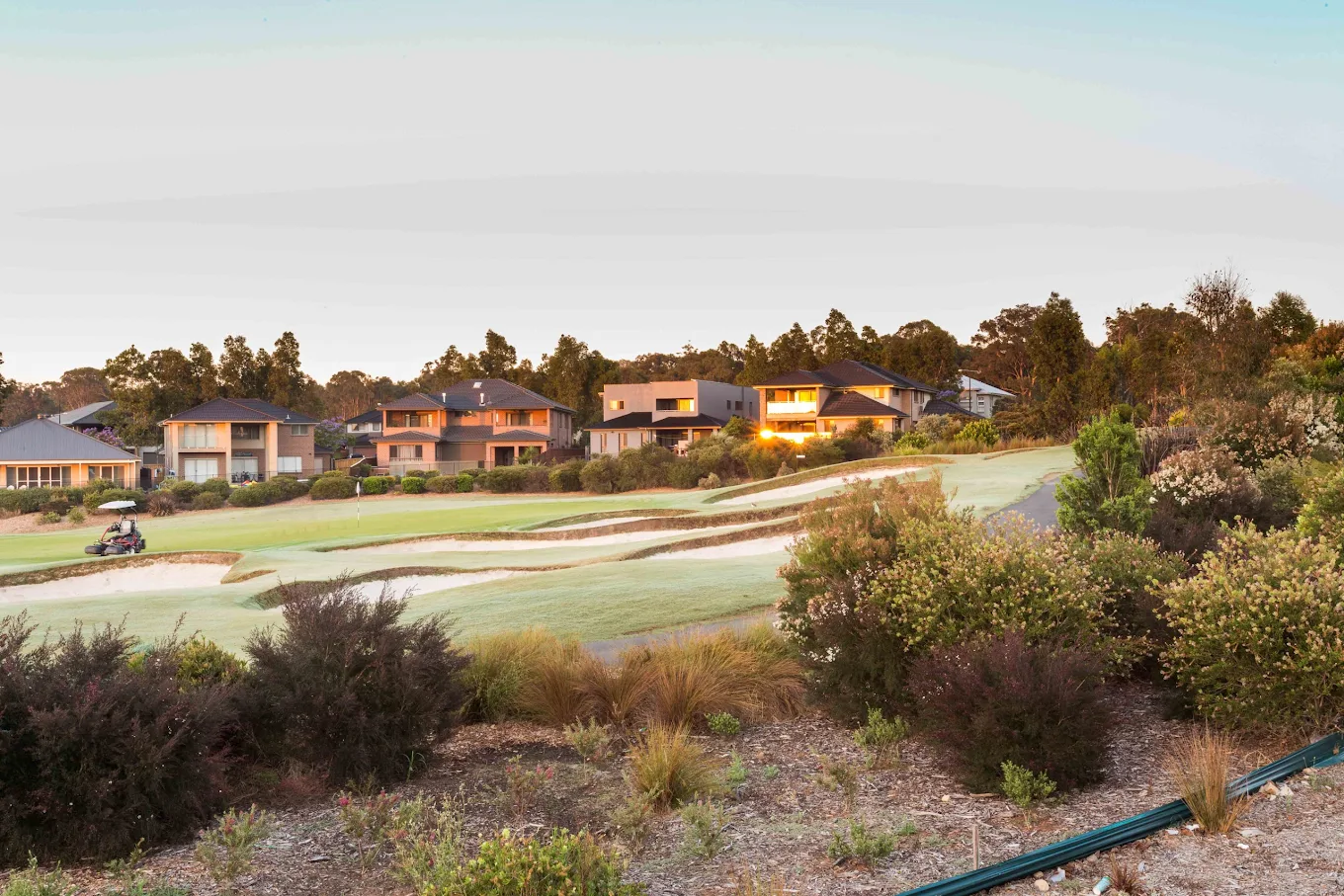
Exeter developed significantly following the extension of the Great Southern Railway in 1867. It became a favored summer retreat for Sydney's elite in the late 19th century, leading to the construction of grand manor houses and extensive European-style gardens. The village has successfully preserved its turn-of-the-century aesthetic, making it one of the most historically intact villages in the region.
Today, Exeter is an affluent 'lifestyle' suburb characterized by large acreage estates, a tight-knit community, and a quiet, rural-residential atmosphere that attracts retirees and high-net-worth weekenders.
- Exceptional privacy and large land holdings rarely found so close to a village center.
- Strong capital preservation due to the suburb's 'blue-chip' status in the Southern Highlands.
- High-quality primary education and proximity to elite private schools in Bowral.
- Picturesque, well-maintained streetscapes with a distinct four-season climate.
- Very low crime rates and a safe, community-oriented environment.
- High maintenance costs associated with large gardens and historic structures.
- Strict heritage overlays can make even minor renovations difficult and expensive.
- Significant bushfire risk requires ongoing property preparation and high insurance premiums.
- Many properties rely on septic systems rather than town sewer, requiring regular audits.
- Limited local shopping; a 15-minute drive to Moss Vale is necessary for most supplies.
How this suburb feels day-to-day.
Dominant dwelling stock.
Typical entry to ceiling.
Exeter represents the 'top end' of the Southern Highlands market. It is a destination for buyers who prioritize heritage, gardening, and privacy over urban convenience. Understanding the balance between its prestige and its environmental risks is critical for any long-term investment.
$1.9m – $5.5m (Village) / $6m+ (Estates)
N/A - Extremely limited unit stock
12-month movement
Current asking rents
The market is characterized by low volume and high value. Prices are driven by land size and the quality of 'improvements' (gardens and outbuildings) rather than just bedroom count.
Price comparison
Median price ÷ median income
Estimated rental yield
Exeter is not an entry-level market. It is significantly less affordable than neighboring Moss Vale or Bundanoon, catering to a wealthy demographic.
Lower = tighter market
Avg time on market
Annual rental increase
Professional families relocating for lifestyle or corporate executives on regional contracts.
Poor for traditional yield-seekers due to high entry costs and low yields. Better suited for land-banking or short-term holiday rental (STHA) strategies, though local council regulations on STHA are tightening.
- Continued 'tree-change' demand from high-wealth Sydney professionals.
- Finite supply of heritage-protected village lots.
- Prestige 'halo effect' from the Southern Highlands' growing reputation as a luxury destination.
- Improvements to the Hume Highway making commuting to Western Sydney more viable.
- Rising insurance premiums in high-risk bushfire zones.
- High interest rates impacting the 'discretionary' second-home market.
- Restrictive zoning preventing subdivision of larger lots.
Expect steady, low-volatility growth. Exeter will likely remain a 'safe haven' for capital, though the rapid gains seen during 2020-2022 are unlikely to be repeated in the current interest rate environment.
vs last 12 months
Relative comparison
Safety concerns are minimal. The primary 'risk' is wildlife on roads (wombats/kangaroos) and opportunistic theft from unsecured rural outbuildings.
The primary risks are environmental and regulatory rather than social or economic.
Low risk; the area is elevated. Localized drainage issues may occur on heavy clay soils during high rainfall.
High risk. The suburb is surrounded by dense bushland and many properties have significant canopy cover. Compliance with RFS 10/50 rules is essential.
Increasingly expensive. Buyers should obtain insurance quotes during the cooling-off period, as some providers may decline cover for properties with high fuel loads.
Heritage Conservation Area, Bushfire Prone Land, Significant Landscape Overlay.
Very limited; most activity is restricted to high-end renovations of existing dwellings.
The Wingecarribee Local Environmental Plan (LEP) is very protective of Exeter's character. Subdivision is extremely difficult, which protects value but limits development upside.
Car-dependent. Rail is available but limited to the Southern Highlands line (irregular intervals).
High for nature and peace; low for retail and nightlife. The Exeter General Store is the social hub.
Excellent access to Morton National Park and local reserves.
Exeter Public School is a major drawcard for young families.
Requires travel to Bowral (Public/Private hospitals) approximately 20 minutes away.
An older, highly educated, and wealthy population with a high percentage of retirees and self-employed professionals.
The demographic profile suggests a stable, low-leverage community that is less sensitive to immediate economic shocks than first-home buyer suburbs.
No large-scale commercial or residential developments are planned within the village to preserve heritage.
- Preservation of property values through scarcity.
- Maintenance of the 'village feel' that drives demand.
- Council investment in local road safety and drainage.
- Lack of new housing options for downsizing locals.
- Increasing pressure on local infrastructure during tourist peak seasons.
Residents are fiercely protective of the village's quiet character and heritage. There is a high level of satisfaction regarding safety and natural beauty, though some frustration exists regarding the lack of local shops and slow internet in certain pockets.
Exeter is a slice of England in the Highlands; the gardens in spring are world-class and the community is wonderfully supportive.
The peace is worth the drive to Moss Vale for groceries, but the train service to the city is too infrequent for daily commuting.
Exeter Public is a fantastic small school where every teacher knows every child's name. It's a very safe place to raise kids.
- Prioritize properties with established gardens; the 'Highlands Garden' adds significant value that takes decades to replicate.
- Verify the BAL (Bushfire Attack Level) rating early; this affects renovation costs and insurance.
- Check the status of the septic system; older systems may require expensive upgrades to meet current council standards.
- Engage a conveyancer familiar with Wingecarribee heritage overlays; they are stricter than most Sydney councils.
- Visit the property during different seasons; Exeter's appeal changes significantly from the lush spring to the bleak winter.
- Negotiate on the basis of maintenance requirements; large estates often have deferred maintenance on outbuildings.
- What is the BAL rating for this specific lot?
- Is the property on town sewer or a septic system, and when was the last service?
- Are there any specific heritage restrictions on the outbuildings or trees?
- What are the average heating costs for this home during winter?
- Has the property ever been impacted by nearby bushfires or required evacuation?
- What is the current NBN connection type and speed?
- Are there any easements on the land that restrict further building or landscaping?
- How much of the land is 'usable' versus protected bushland?
- Professional garden staging is just as important as interior staging in this market.
- Ensure all heritage-listed features are well-documented and maintained before listing.
- Highlight energy efficiency; Highlands winters are cold and heating costs are a major buyer concern.
- Target the Sydney 'weekend warrior' market with high-quality digital walkthroughs.
- Be transparent about bushfire management plans to build buyer confidence.
Position the property as a 'legacy asset'—an heirloom estate that offers a lifestyle unattainable in the city. Focus on the 'four seasons' and the historical narrative of the home.
Exeter is a capital growth play, not a yield play.
High entry cost, low rental yield, and potential for high vacancy if the property is not premium quality.
- Look for 'undervalued' cottages within the village core that can be sympathetically renovated.
- Consider the short-term holiday rental market (Airbnb) but check the latest council caps on nights per year.
- Focus on land size; 2+ acre lots within walking distance of the station are the 'gold standard'.
- Ensure the property has high-speed NBN or Starlink capability to attract remote-working tenants.
- Be prepared to provide extensive references; the rental market is small and competitive.
- Ask about heating systems; older cottages can be extremely expensive to heat in winter.
- Clarify who is responsible for garden maintenance in the lease agreement.
Access to a high-end lifestyle and elite school catchment for a fraction of the mortgage cost.
Very few rental properties come to market; you may need to look in Moss Vale or Bundanoon.
- Include professional garden maintenance in the rent to protect your asset's value.
- Install high-quality insulation and efficient heating to attract long-term tenants.
- Ensure the property is fully compliant with the latest NSW smoke alarm and electrical safety laws.
Strict adherence to septic tank inspection schedules is required by Wingecarribee Council.
- The 'Exeter brand' is stronger than the 'Southern Highlands brand' for certain high-net-worth buyers.
- Buyers are often looking for a 'slower pace' and will pay a premium for silence and privacy.
- The General Store is the heart of the village; mention it in all marketing.
The English Village Lifestyle; Four Seasons Living; The Ultimate Tree-Change; Historic Grandeur.
Affluent Sydney professionals (45-60), retirees from the North Shore/Eastern Suburbs, and young families seeking elite schooling.
This report is based on data available as of 2026-03-31 and is intended for informational purposes only. It does not constitute financial, legal, or real estate advice. Buyers should conduct their own independent investigations and consult with professionals before making any property purchase.